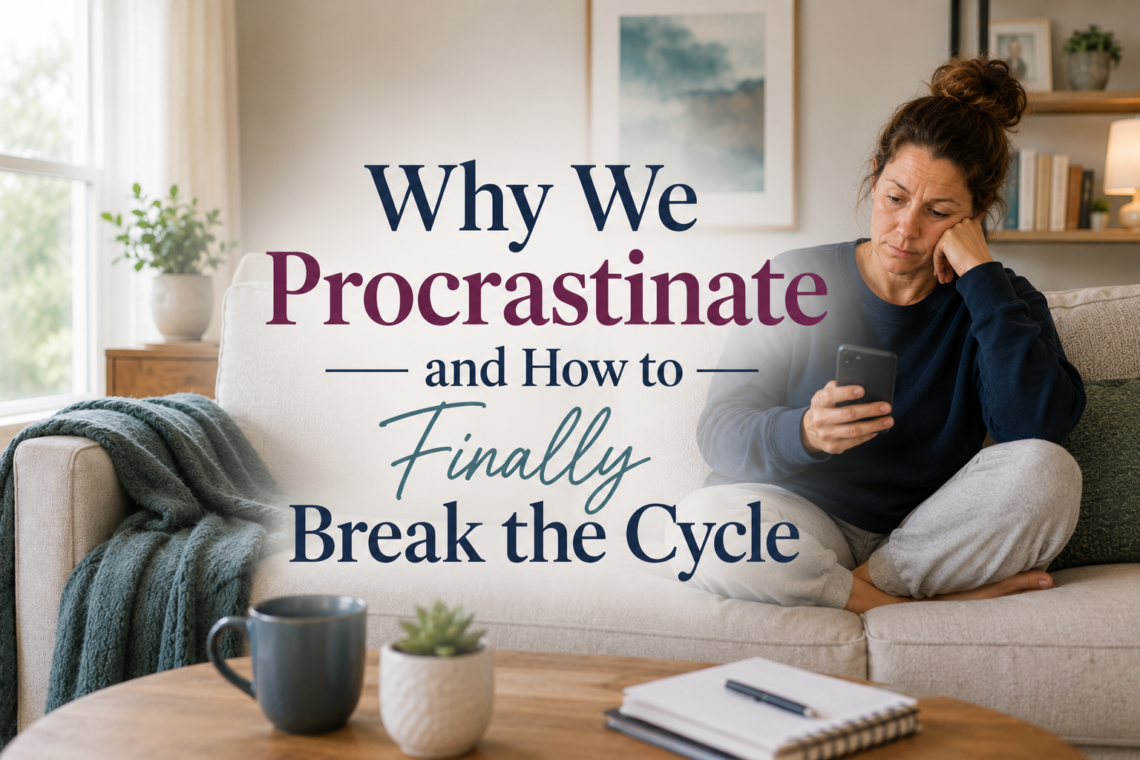
I can waste an incredible amount of energy avoiding something that would probably take me 20 minutes to do.
I can think about it.
Put it on a list.
Move it to tomorrow’s list.
Feel guilty about not doing it.
Tell myself I’ll definitely do it later.
Find three other things that suddenly seem very important.
And then spend the rest of the day with that unfinished thing quietly hanging over my head.
That is the strange thing about procrastination.
We procrastinate because we want relief.
But procrastination rarely gives us relief.
It usually gives us temporary escape followed by even more stress.
And once I started looking at procrastination that way, I realized that beating it wasn’t simply about becoming more disciplined or productive.
It was about learning to stop running from discomfort.
What Procrastination Actually Is
Procrastination is delaying something we know we need—or even want—to do, despite knowing that putting it off will probably make things harder later.
That might be:
- making the appointment
- starting the workout
- cleaning out the room
- dealing with the paperwork
- beginning the project
- having the uncomfortable conversation
- changing the eating habits
- applying for the job
- opening the bill
- finally starting the thing you have talked about starting for two years
Sometimes we procrastinate because we simply don’t feel like doing something.
But very often, procrastination isn’t really about laziness.
It’s about how the task makes us feel.
The task might make us feel overwhelmed.
Bored.
Uncertain.
Inadequate.
Uncomfortable.
Afraid we might fail.
Afraid we might make the wrong decision.
Or even afraid that if we start, we’ll discover just how much work there is to do.
So our brain finds an easier way to feel better right now.
I’ll check my phone first.
I’ll start Monday.
I need to research it a little more.
I’m too tired today.
I’ll wait until I have more time.
And suddenly we feel a tiny bit better because we don’t have to face the uncomfortable thing yet.
That is one reason procrastination can become such a powerful habit.
Procrastination Can Be a Form of Stress Relief
This was an important realization for me:
Sometimes procrastination is an attempt to regulate how we feel.
We have something hanging over us that feels difficult, so we remove the immediate discomfort by deciding not to do it right now.
Ahhh.
Relief.
Except the relief doesn’t last.
Because the task is still there.
Now you’ve added guilt.
And less time.
And frustration with yourself.
And maybe consequences.
Tomorrow, the same task that originally caused a little stress may cause even more because now you’re behind.
So you avoid it again.
And the cycle continues:
Stress → Avoid → Temporary Relief → More Stress → More Avoidance
This is why telling yourself to “just stop procrastinating” doesn’t always work.
You have to recognize what you’re actually doing.
You’re often not avoiding the task.
You’re avoiding the feeling associated with the task.
How to Recognize Procrastination When It Doesn’t Look Like Procrastination
Some procrastination is obvious.
Watching TV when you should be working is pretty easy to identify.
But some procrastination disguises itself as productivity.
You might be procrastinating if you continually:
- research instead of beginning
- organize instead of doing
- make new plans instead of following the current one
- wait for the “right time”
- keep preparing long after you have enough information
- do easy tasks so you can avoid the important one
- tell yourself you’ll start when you feel more motivated
- constantly redesign the plan before you’ve actually tested it
One of my personal favorites is productive procrastination.
You don’t do nothing.
You do seventeen other things.
The kitchen gets cleaned. Emails get answered. A drawer gets organized. You suddenly remember an errand you’ve been meaning to run.
You can end the day exhausted and still have avoided the one thing that actually mattered.
That is why one of the best questions I’ve learned to ask myself is:
What am I avoiding right now?
Usually, I know the answer.
The Stress-Relieving Power of Just Doing the Thing
Here’s the part we tend to forget.
Taking action is often far more stress relieving than avoiding action.
Think about something you’ve procrastinated on for days or weeks and then finally did.
How many times have you thought:
Why did I make such a big deal out of that?
There is an enormous amount of mental energy tied up in unfinished business.
Every time you remember the thing, your brain has to carry it again.
I need to do that.
Don’t forget about that.
I really should have done that already.
Tomorrow I have to do that.
The task may only require 30 minutes.
But you’ve spent six days thinking about those 30 minutes.
Sometimes the fastest way to feel better isn’t another break.
It isn’t scrolling.
It isn’t ignoring the problem until tomorrow.
It’s removing the problem.
Make the call.
Clean the mess.
Schedule the appointment.
Go for the walk.
Send the email.
Start the document.
Do the first ten minutes.
Action creates a different kind of relief—the kind that actually lasts.
How to Break the Procrastination Cycle
I don’t think we need complicated productivity systems for every problem.
Sometimes we need to make taking action so simple that our excuses have nowhere to hide.
1. Name What You’re Avoiding
Stop letting the thing remain a vague cloud hanging over you.
Write it down.
What exactly am I procrastinating on?
Not “get healthier.”
Maybe it’s:
Plan my dinners for this week.
Not “get my life together.”
Maybe it’s:
Schedule the appointment I’ve been putting off.
Specific problems are much easier to act on than vague ones.
2. Ask Why You’re Avoiding It
Then ask:
What about this feels uncomfortable?
Maybe you don’t know where to begin.
Maybe the project feels enormous.
Maybe you’re afraid you’ll do it badly.
Maybe you’re tired.
Maybe it’s boring.
Maybe making the decision means you have to admit something needs to change.
You don’t have to psychoanalyze yourself for three hours.
You just need to identify the obstacle.
Because once you know what you’re actually avoiding, you can deal with that.
3. Shrink the Starting Point
One of the biggest mistakes we make is thinking we have to finish something when what we really need to do is start it.
Don’t clean the entire house.
Clean the kitchen counter.
Don’t completely overhaul your diet today.
Make one better meal.
Don’t finish the project.
Work on it for 15 minutes.
Don’t commit to becoming someone who works out six days a week.
Put on your shoes and walk.
The first action should feel almost ridiculously doable.
Momentum can take over from there.
4. Stop Waiting to Feel Like It
This may be the biggest one.
You are not always going to feel motivated before doing something difficult.
Sometimes motivation comes after you begin.
We can waste years waiting for a magical combination of energy, confidence, clarity and enthusiasm.
Meanwhile, people who aren’t particularly motivated are quietly getting things done because they learned how to act while not feeling like it.
That is a skill.
And it gets stronger every time you practice it.
5. Give Yourself a Short Action Window
When I really don’t want to do something, I like the idea of making the commitment smaller.
Give it ten minutes.
Fifteen minutes.
Twenty minutes.
Set a timer and begin.
You are not agreeing to finish the entire thing.
You’re agreeing to stop avoiding it.
There is a big difference.
And very often, starting is the hardest part.
6. Do the Thing That Will Give You Relief Later
When you’re deciding what to do next, ask:
What would make me feel better tonight if I got it done now?
That question changes things.
Instead of chasing immediate relief, you’re choosing real relief.
And that is one of the most useful ways I’ve found to think about procrastination.
Sometimes You Need Action More Than Another Plan
There comes a point when planning stops helping.
You don’t need another podcast.
Another Pinterest board.
Another perfectly organized list.
Another Monday.
You need evidence that you can tell yourself you’re going to do something—and then actually do it.
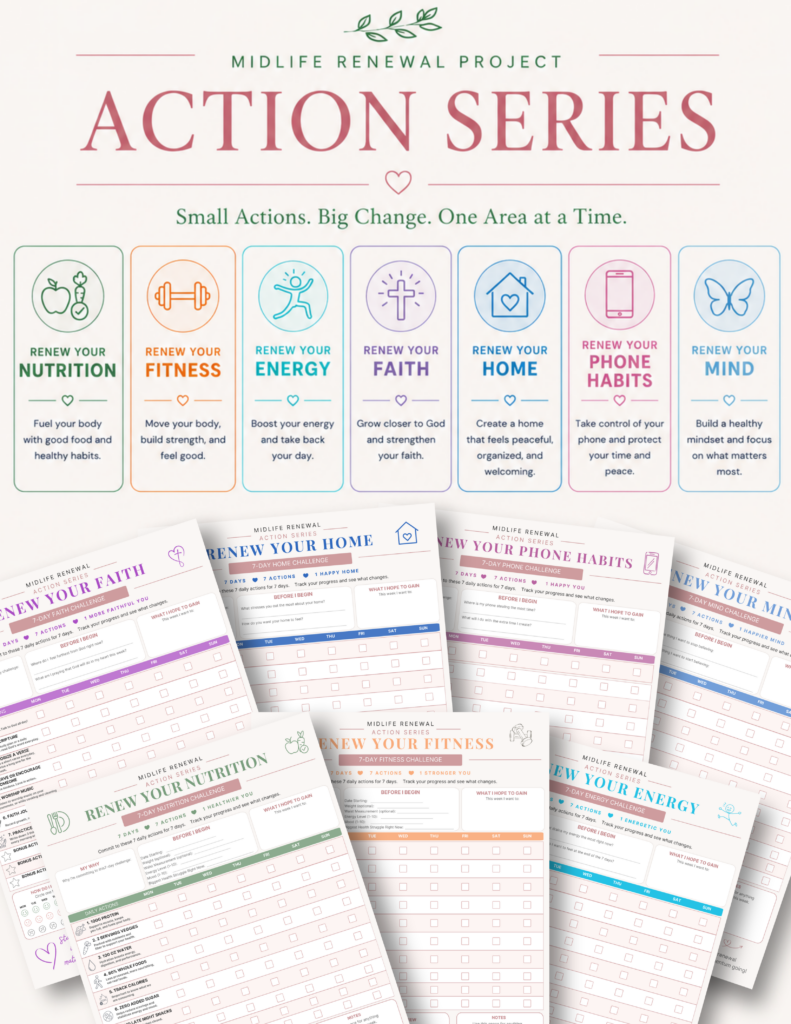
That is one of the reasons I created my Midlife Renewal Action Series. It’s built around taking concrete action instead of endlessly thinking about changing. You choose an area of your life and start doing the things that move it forward.
Explore the Midlife Renewal Action Series →
Because sometimes the cure for feeling stuck isn’t figuring out your entire life.
It’s completing one action today.
Then another tomorrow.
Try the “Do It Now” Experiment
For the next week, experiment with something.
Whenever you catch yourself about to postpone a small task, ask:
Could I just do this now?
Not every task needs to be done immediately, of course.
But pay attention to how often you automatically tell yourself “later” when now would actually be easier.
Put the item away.
Book the appointment.
Reply to the message.
Fill out the form.
Take the walk.
Order the thing you need.
Put the laundry in.
Spend ten minutes on the project.
You may be surprised by how much lighter life feels when you stop creating dozens of tiny obligations for your future self.
You Don’t Have to Fix Your Entire Life Today
I think this is especially important in midlife.
You can look around and suddenly see everything you want to change.
Your health.
Your body.
Your routines.
Your house.
Your work.
Your habits.
Your future.
And when everything feels important, sometimes we do nothing.
But you don’t have to transform your whole life this week.
You just have to stop continually postponing it.
Choose something.
Begin.
Then prove to yourself that you can keep going.
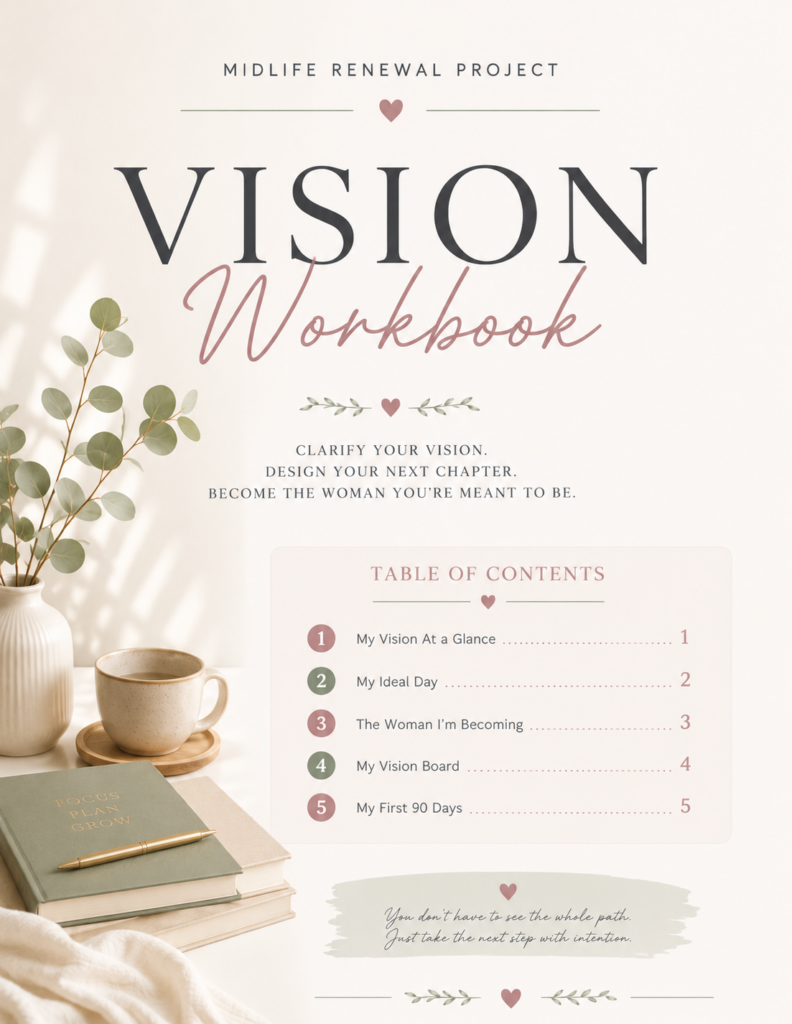
If you’re not even sure what you want your next chapter to look like yet, my free Vision Workbook can help you step back and think about what you actually want before deciding what needs to change.
Get the Free Vision Workbook →
Stop Handing Everything to Your Future Self
I’ve realized that procrastination is basically making promises on behalf of a future version of myself.
I’ll do it tomorrow.
I’ll deal with it next week.
I’ll start next month.
Apparently Future Me has unlimited energy, plenty of free time and an incredible amount of motivation.
Unfortunately, she is still me.
Tomorrow arrives, and the task is still inconvenient.
The workout still requires effort.
The project still feels intimidating.
The conversation is still uncomfortable.
There will always be another opportunity to postpone your life.
At some point, we have to stop asking our future selves to rescue us.
We have to become the person who handles things.
Not perfectly.
Not immediately every single time.
But more often than we avoid them.
The Goal Isn’t to Never Procrastinate Again
You’re going to procrastinate sometimes.
I certainly will.
The goal is to catch yourself sooner.
To recognize when you’re seeking temporary relief.
To notice when planning has become avoidance.
To understand that discomfort doesn’t mean you shouldn’t do something.
And to remember how good it feels when something that has been hanging over you is finally DONE.
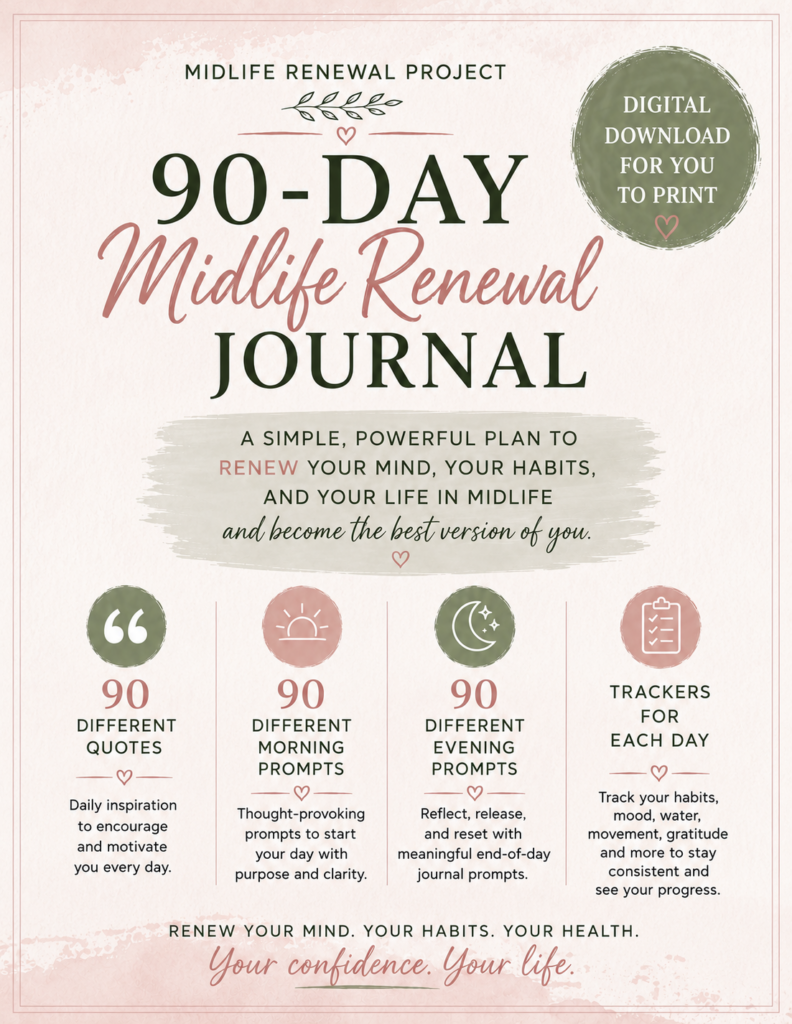
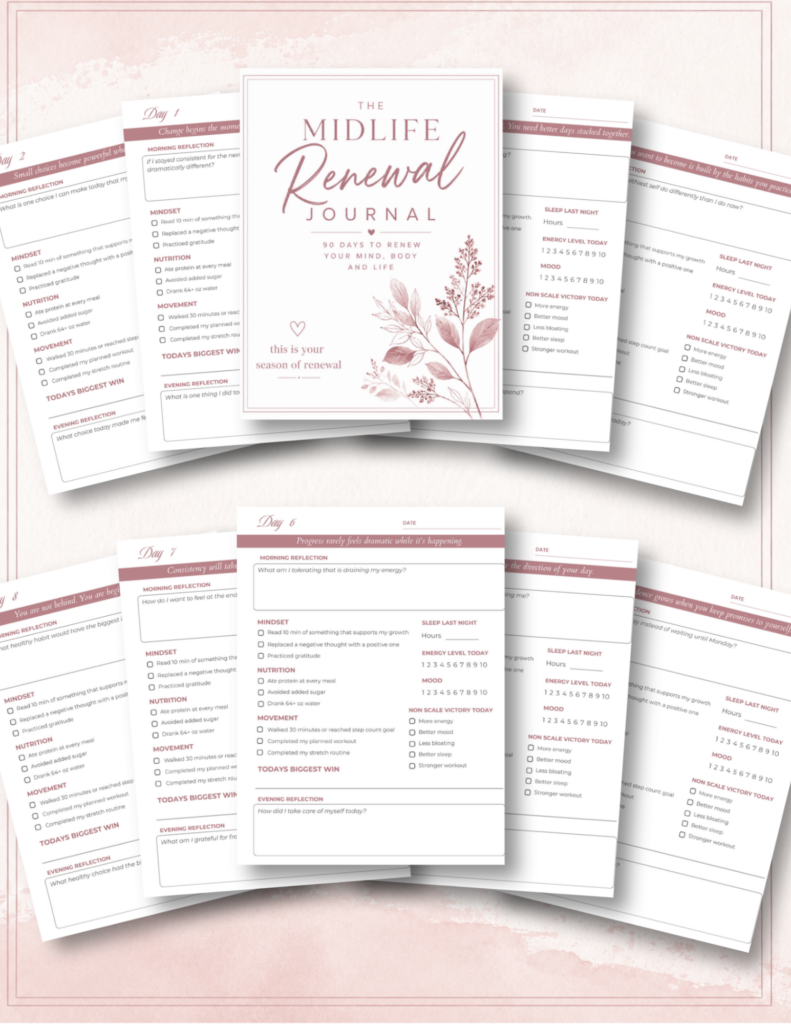
If procrastination has become a pattern in several areas of your life, my 90-Day Midlife Renewal Journal is another tool I’ve created to help you become more intentional about how you’re actually spending your days. The daily prompts and trackers give you a place to notice your patterns, decide what matters and keep showing up for the life you’re trying to build.
See the 90-Day Midlife Renewal Journal →
And if you want somewhere simpler to begin, start with my free Vision Workbook and decide what you want this next chapter to look like.
Get the Free Vision Workbook →
Then choose one thing you’ve been putting off.
Not ten things.
One.
And before you close this page, ask yourself:
What am I waiting for?
Because maybe the thing that will make you feel better today isn’t avoiding it one more time.
Maybe it’s finally doing it.
Also check out my free Project Me Blueprint here!