
I’ve noticed something lately, in myself, and in almost every woman I talk to about making a change in her life. We don’t actually get stuck on the doing. We get stuck before we even start, stuck in our own heads, deciding ahead of time that whatever we’re about to do is going to be hard.
I started paying closer attention to it. Watching for the moment right before I’d talk myself out of something, or drag myself into it feeling defeated before I’d even begun. And what I noticed surprised me: the thing itself was never actually the problem. It was the story I was telling myself about the thing.
So here’s the question I’ve been sitting with, and the one I want to hand to you today:
You know the sentence before you even say it out loud.
“Ugh, I have to start eating healthy again.” “I really should work out, but it’s just so hard to get motivated.” “Changing my life feels overwhelming.”
Here’s a question worth sitting with: is it actually hard? Or have you just decided it’s hard before you even tried?
The Resistance Isn’t in the Task. It’s in Your Head.
Think about what “eating healthy” literally requires. You open the fridge. You choose the eggs instead of the pastry. You chew. You swallow. That’s it. That’s the whole physical act.
Or take a workout. You put on shoes. You walk out the door. You move your body for twenty minutes. None of that is complicated. A toddler could technically do all of those motions.
So why does it feel like climbing a mountain?
Because somewhere along the way, we stopped describing what we’re doing and started narrating how we feel about it. “I have to” became “this is so hard.” “I’m choosing to” became “I’m dreading this.” We built an entire emotional storyline around a handful of simple physical actions, and then we started believing the storyline more than the actions themselves.
The workout was never the hard part. The argument you have with yourself before the workout, that’s the hard part. And that argument is optional.
Picture This
Maybe you’ve had a morning like this: alarm goes off, and before your feet even hit the floor, your brain is already exhausted. Ugh, today’s a gym day. I don’t want to. You spend ten minutes negotiating with yourself, feeling the dread build, and by the time you actually get moving, you’re drained, and you haven’t done a single squat yet.
Now imagine a different version of that same morning. Alarm goes off. You think: okay, twenty minutes of moving my body. Easy. No internal debate. No dramatic inner monologue. You just get up, and you do the thing, because the thing itself was never actually that hard.
Same workout. Same twenty minutes. Completely different experience. The only thing that changed was the sentence running through your head.
Try This Reframe
The next time you catch yourself thinking something is “so hard,” pause and ask: is the action itself hard, or am I just resisting it emotionally?
Then try swapping the language:
- Instead of “I have to go on a diet” → “Choosing real food is pretty simple.”
- Instead of “Working out is such a struggle” → “Moving my body for twenty minutes is easy. I’m just choosing to do it instead of something else.”
- Instead of “This is going to be so hard” → “This is actually simple. My feelings about it are just loud right now.”
You’re not lying to yourself. You’re describing reality more accurately. The vegetable is not hard to eat. The walk is not hard to take. Your emotions are just really good at making simple things feel complicated, and the second you notice that, you take some of their power away.
Where to Start Practicing This
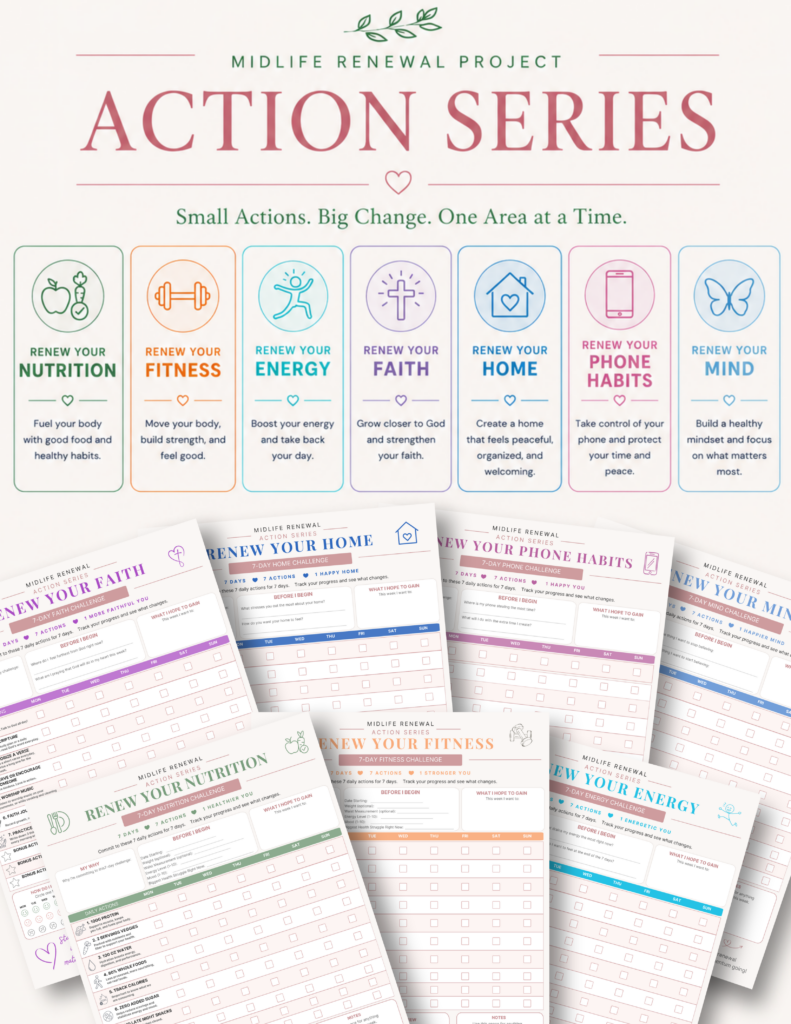
This is one of the reasons I created the Midlife Renewal Action Series. Sometimes the idea of changing your health, habits, routines, or mindset feels enormous because we’re looking at the whole thing at once. The Action Series brings the focus back to what you can actually do today. One small action. Then another. Then another.
Because when you stop thinking about everything that needs to change and simply focus on the next thing in front of you, it suddenly feels a lot more manageable.
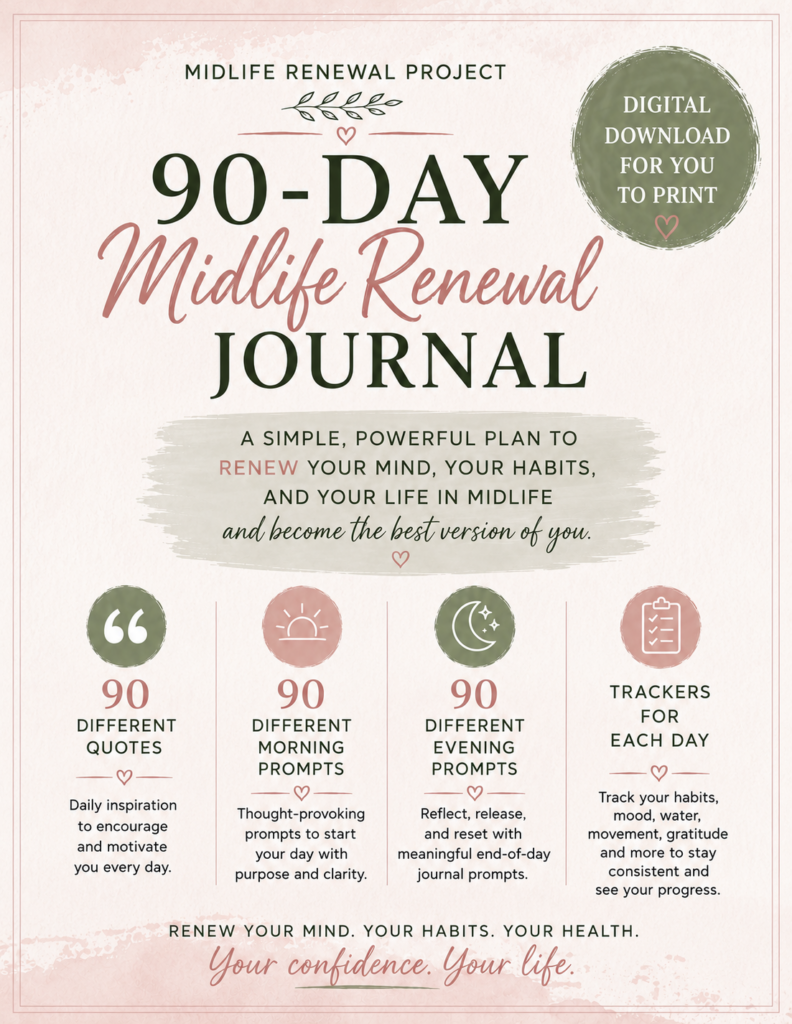
And if you want a way to stay connected to the bigger picture of where you’re going, that’s what I created the 90-Day Midlife Renewal Journal for. It gives you a few minutes each day to slow down, think about what you’re working toward, notice how you’re doing, and keep yourself from drifting back into autopilot.
Maybe you don’t need more willpower.
Maybe you need less resistance.
And maybe the first place to start is simply noticing the story you’re telling yourself before you even begin.