For years, I was hungry all the time. Not “meal-skipping” hungry — the kind that shows up about an hour after you eat and never really goes away, no matter how many times you promise yourself you’ll do better tomorrow. I grazed all afternoon, gave in to sugar most nights, and spent an embarrassing amount of mental energy just thinking about food — what I’d already eaten, what I still wanted, whether today was finally going to be the day I “got it together.”
Trying to lose weight in the middle of all that felt like trying to out-willpower my own stomach. I never won.
Protein wasn’t some trendy fix I reached for first. It was just the thing that finally worked — not because I suddenly had more discipline, but because I stopped being so hungry in the first place. Once I wasn’t fighting my own appetite all day, everything else got easier.
Why Protein Became the One Change That Actually Stuck
Here’s what nobody tells you about midlife: your appetite, your energy, and your ability to hang onto muscle all start working against you a little. Protein pushes back on all three at once.
When you’re eating enough of it, you’re usually:
- Less hungry between meals (no more white-knuckling it until dinner)
- Less snacky in general, especially in the afternoon
- Less likely to crave sugar right after eating
- More satisfied by meals that used to leave you searching the pantry an hour later
It’s not a magic fix. It’s just the one change that makes every other change easier — because you’re not fighting your own hunger the whole time.
What Actually Changed for Me
- I stopped being hungry all the time. Meals actually held me for hours instead of about sixty minutes.
- Losing weight stopped feeling like a fight. It started happening as a side effect of not being ravenous, instead of something I had to white-knuckle my way through.
- My cravings for sugar and junk food eased up in a way that dieting on its own had never managed to do.
- I stopped thinking about food constantly. No more running a mental tally of what I’d already eaten and what I still wanted — my brain finally had room for other things.
My Go-To Protein Grocery List
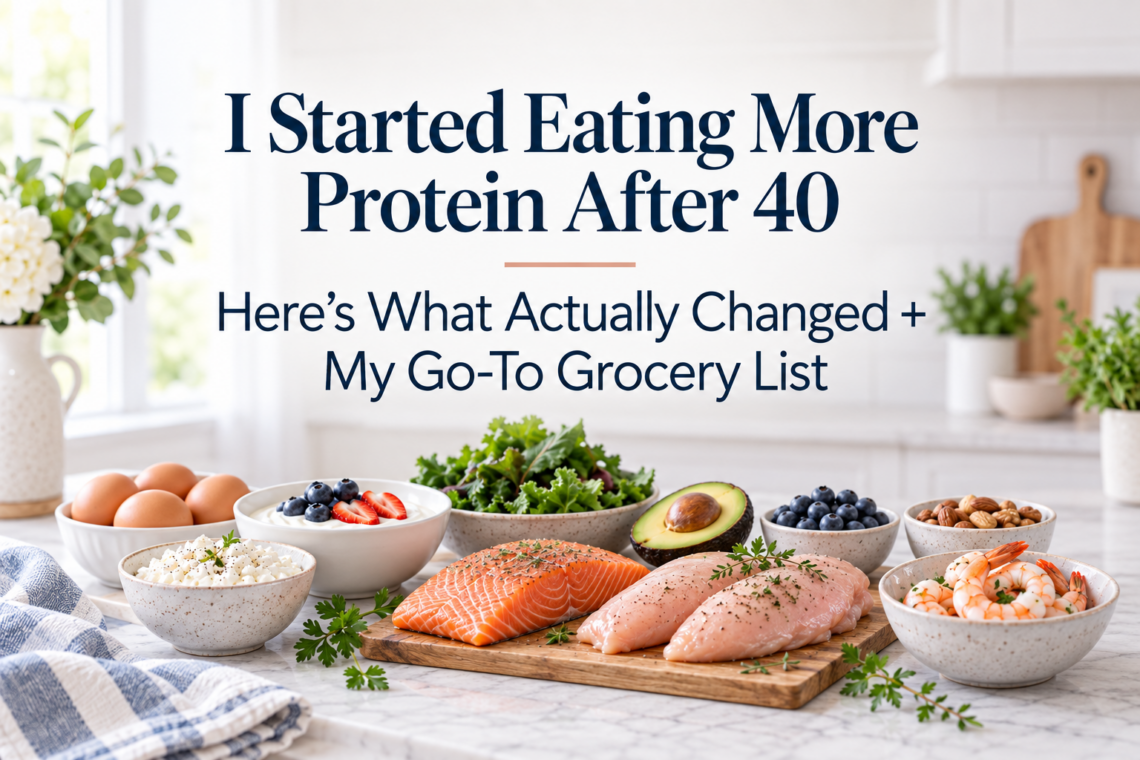
This isn’t a strict meal plan — it’s the list of foods I keep on hand so eating enough protein stops requiring effort or willpower. Once these are in your fridge and pantry, healthier eating becomes the default instead of something you have to talk yourself into.
Proteins (build every meal around one of these)
- Chicken breast or thighs
- Salmon — fresh or canned, both count
- Lean ground turkey or beef
- Eggs
- Canned tuna
- Shrimp (fast-cooking, good for no-plan nights)
High-Protein Breakfast Staples
- Plain Greek yogurt
- Cottage cheese
- Protein powder (vanilla or unflavored — goes in smoothies or oats)
- Eggs, obviously — they earn a second mention
Dairy Worth Keeping Stocked
- String cheese
- Milk (regular, lactose-free, or a higher-protein option)
- Parmesan, for finishing meals with flavor instead of extra carbs
Protein-Rich Beans & Legumes
- Lentils
- Chickpeas
- Black beans or kidney beans
- Edamame
Emergency No-Cook / Low-Cook Backups
- Rotisserie chicken
- Canned tuna or salmon pouches
- Hummus
- Pre-boiled eggs
- A protein shake or bar for the days there’s genuinely no time
Real Meal Combos From This List (No Recipes Required)
Breakfast: Greek yogurt with berries and a spoonful of nut butter. Or two eggs and avocado on whole-grain toast. Or a smoothie with protein powder, milk, spinach, and frozen fruit.
Lunch: Rotisserie chicken over greens with olive oil, lemon, and a scoop of beans. Or tuna mixed with avocado instead of mayo, alongside sliced cucumbers.
Dinner: Baked salmon with roasted broccoli and a sweet potato. Or a sheet pan of chicken thighs, peppers, and quinoa. Or a quick turkey and bean chili.
Snacks: Cottage cheese with berries. Hard-boiled eggs. String cheese and an apple. Hummus with raw veggies. A protein shake when you need something in five minutes flat.
If You Want This Turned Into an Actual Plan (Not Just a List)
A grocery list gets the right food into your kitchen. It doesn’t build the habit of actually reaching for it every day — that part takes a little more structure.
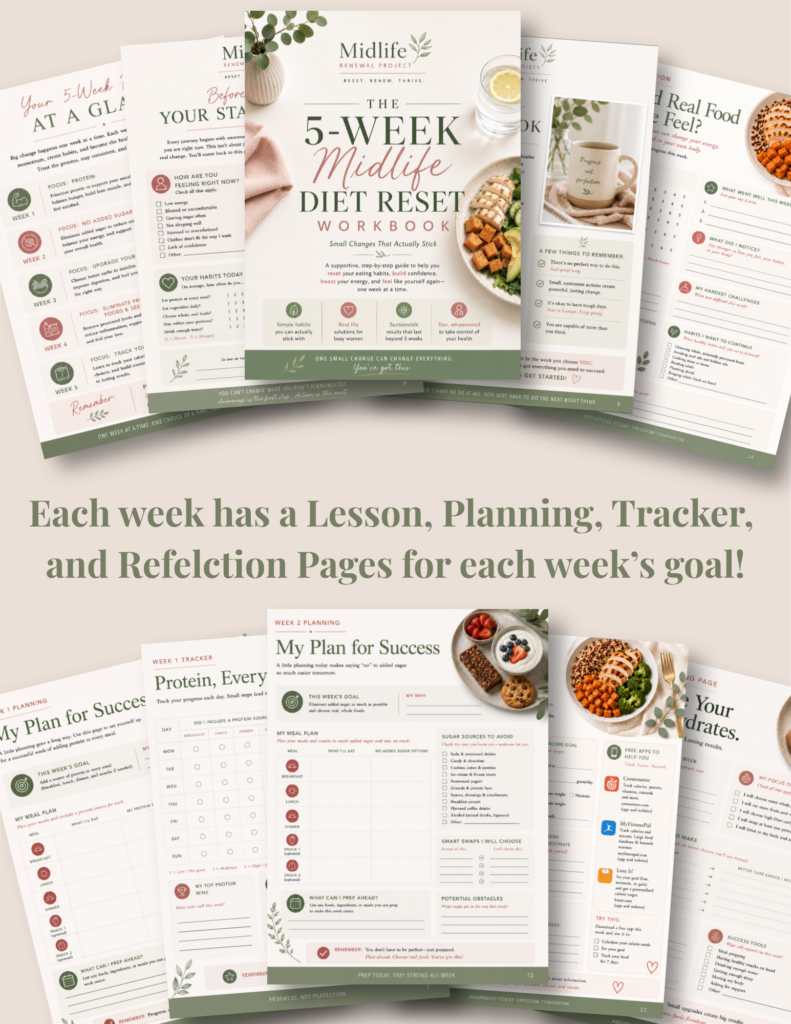
That’s exactly what Week 1 of my 5-Week Midlife Diet Reset Workbook is built around. Before you touch sugar, carbs, or anything else, Week 1 is entirely focused on adding protein to every meal — because it’s the change that makes every other change easier. Inside, you’ll get a full protein cheat sheet with exact gram counts per serving, simple portion visuals so you’re never guessing, a “protein by meal” idea list for busy days, and a planning page to help you actually get through the week instead of white-knuckling it.
If this grocery list is the “what to buy,” the workbook is the “how to make it stick.” Grab it here: