
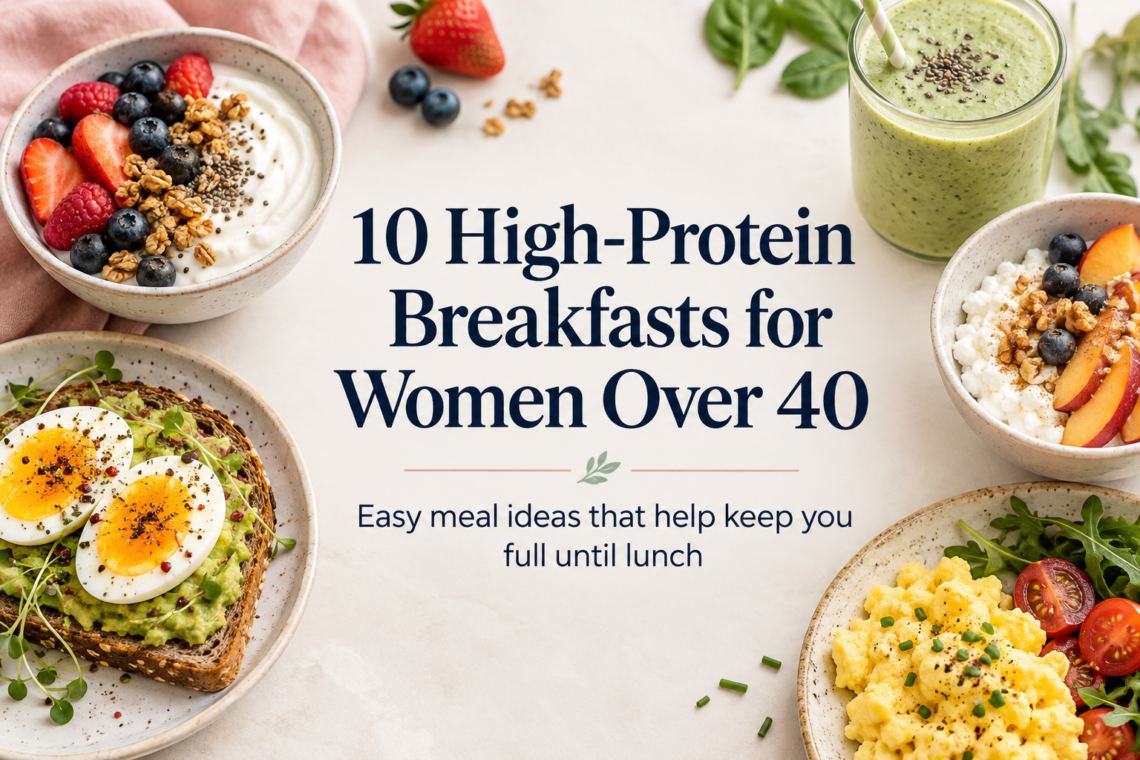
If you’re over 40 and already thinking about food again by 10 a.m., breakfast might be a good place to start.
For a long time, I thought a lighter breakfast was the better choice. I didn’t want to “waste” too many calories first thing in the morning, so I would eat something small and assume I was doing myself a favor. The problem was that I would spend the rest of the morning thinking about food. By afternoon, I was much more likely to start craving something sweet, grabbing little snacks, or feeling like I needed willpower just to make it through the day without overeating.
Eventually, I started paying more attention to protein.
Instead of just trying to eat less at breakfast, I started thinking about how I could make breakfast actually hold me over. Eggs, Greek yogurt, cottage cheese, protein smoothies, and other higher-protein foods became the base of the meal instead of an afterthought.
It sounds almost too simple, but it made a noticeable difference. When breakfast was more filling, I wasn’t spending the entire morning waiting for my next opportunity to eat. And when I wasn’t ravenous by lunchtime, making a reasonable choice later in the day felt a lot easier too.
That’s one of the reasons I think protein deserves more attention in midlife. We tend to focus so much on what we’re trying to cut out that we sometimes forget to ask whether we’re eating enough of the foods that actually help us feel satisfied.
Why Protein at Breakfast Matters After 40
Protein isn’t some magic weight-loss food, but it can make eating well feel a whole lot easier.
One of the biggest benefits is simply that protein is filling. A breakfast built around protein will generally keep you satisfied longer than one made mostly from refined carbohydrates. That means you’re less likely to finish breakfast only to find yourself wandering back into the kitchen an hour or two later.
Protein can also help create a more balanced meal. Instead of having something like toast, cereal, or a pastry on its own, pairing carbohydrates with protein, fiber, and healthy fat can help slow digestion and give you steadier energy throughout the morning.
Then there’s muscle.
Maintaining muscle becomes increasingly important as we get older, especially through perimenopause and menopause. Muscle supports strength, mobility, metabolism, and healthy aging, and getting enough protein throughout the day is an important part of maintaining it.
Protein also requires more energy to digest than either carbohydrates or fat, but I wouldn’t choose it because you’re trying to “hack” your metabolism. The much more practical benefit is that when your meals leave you satisfied, you’re less likely to spend the entire day fighting hunger and cravings.
For many women, aiming for somewhere around 25 to 30 grams of protein at breakfast can be a useful place to start. You don’t have to hit an exact number every morning, and you definitely don’t need to obsessively track every gram. Think of it as a general target that can help you build a breakfast that actually feels like a meal.
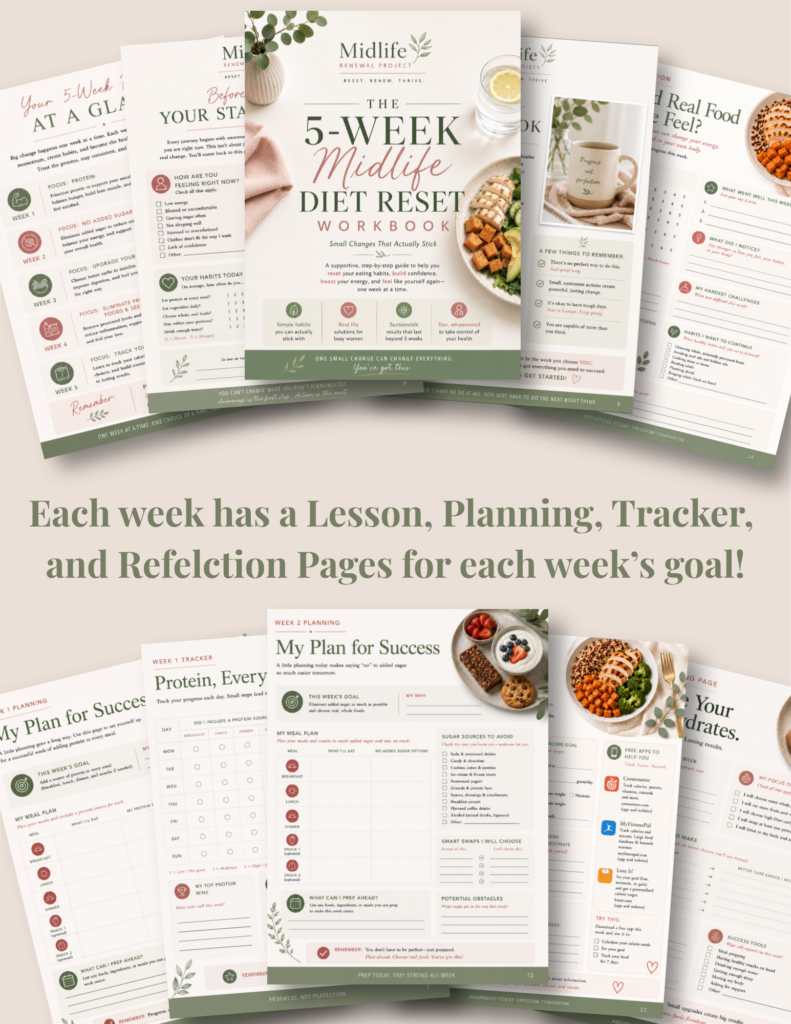
👉 If you’re trying to make changes like this but feel overwhelmed by where to start, my Midlife 5 Week Diet Reset Workbook walks you through simple nutrition habits one week at a time. It’s designed to help you build a realistic way of eating without trying to overhaul everything at once.
Take a look at the Midlife 5 Week Diet Reset Workbook Here
Here are 10 easy ways to do it.
1. Cottage Cheese Egg Scramble
If you’re already making scrambled eggs, this is probably one of the easiest ways to increase the protein without making breakfast feel much bigger.
Scramble three eggs with about 1/2 cup of cottage cheese, then add whatever vegetables you like. Spinach, bell peppers, mushrooms, onions, or tomatoes all work well.
The cottage cheese melts right into the eggs and makes them surprisingly creamy. Add some berries or fruit on the side if you want a little sweetness.
Protein: approximately 30 grams
2. Greek Yogurt Berry Bowl
This is one of my favorite types of breakfast because it takes almost no time to make and doesn’t feel overly heavy.
Start with one cup of plain Greek yogurt, then add berries, chia seeds, and a small handful of walnuts or almonds. If you’re used to sweetened yogurt, drizzle in a little honey at first rather than buying one that’s loaded with added sugar.
You can also add cinnamon, vanilla extract, or a spoonful of nut butter.
It’s cold, quick, filling, and easy enough for mornings when cooking sounds completely unappealing.
Protein: approximately 23 to 28 grams depending on the yogurt and toppings
3. Cottage Cheese Breakfast Bowl
Cottage cheese has become popular again for a reason. It’s one of the easiest ways to get a substantial amount of protein without cooking anything.
Put one cup of cottage cheese in a bowl and top it with berries, peaches, sliced apple, cinnamon, or a few chopped nuts.
If you’re more of a savory breakfast person, skip the fruit and add cucumber, tomato, avocado, black pepper, and a little everything bagel seasoning instead.
Same protein. Completely different breakfast.
Protein: approximately 25 grams
4. Berry Protein Smoothie
Smoothies can either be a filling breakfast or basically a glass of fruit juice depending on what you put in them.
The trick is making protein the foundation.
Blend one scoop of protein powder with unsweetened almond milk or regular milk, frozen berries, a handful of spinach, and about half a banana. Add chia seeds or a tablespoon of almond or peanut butter if you’d like it to be even more filling.
Using frozen fruit makes it thick and creamy without needing much else.
This is especially useful when you’re rushing out the door and know that if you don’t eat something now, you’re going to be starving later.
Protein: approximately 25 to 30 grams
5. Make-Ahead Egg and Turkey Sausage Muffins
These are perfect for the mornings when you don’t have time to stand at the stove.
Whisk eggs together with chopped turkey sausage, spinach, peppers, onions, and a little shredded cheese. Pour the mixture into a muffin tin and bake until the eggs are set.
Keep them in the refrigerator and reheat a few throughout the week.
You’ll probably need three or four egg muffins to make this a substantial breakfast, depending on their size and how much meat and cheese you use. Pair them with fruit if you want something on the side.
The important part is remembering that one tiny egg muffin isn’t breakfast. We’re trying to make mornings easier, not see how little we can survive on.
Protein: approximately 25 to 30 grams for a full serving
6. High-Protein Oatmeal
You don’t have to give up oatmeal just because you’re trying to eat more protein. You just need to stop letting the oatmeal do all the work.
Cook your oats as usual, then stir in protein powder after cooking. Add a little extra milk if it becomes too thick.
Top it with cinnamon, walnuts, berries, chia seeds, or a spoonful of peanut butter.
You still get the warm, comforting bowl of oatmeal, but now it has enough protein to make it a more balanced breakfast.
Another option is making oatmeal with milk instead of water and serving a couple of eggs alongside it.
Protein: approximately 25 to 30 grams depending on the protein powder and milk
7. Eggs, Turkey Sausage and Berries
Sometimes breakfast doesn’t need a recipe.
Cook two eggs with two or three turkey sausage links or patties, then add berries or another piece of fruit on the side.
That’s it.
This is a good reminder that eating well doesn’t always have to involve meal-prepping elaborate bowls or finding some new recipe on Pinterest. A few basic foods on a plate can make a perfectly good breakfast.
Protein: approximately 25 to 30 grams depending on the sausage
8. Overnight Chia Protein Pudding
If mornings are hectic, make breakfast while you’re cleaning up dinner the night before.
Mix chia seeds with milk and protein powder, then let everything sit in the refrigerator overnight. By morning it will have thickened into a pudding-like consistency.
Add berries, chopped nuts, cinnamon, or a spoonful of nut butter before eating.
It takes a little experimenting to find the consistency you like because chia seeds keep absorbing liquid, but once you get the ratio right, this is one of the easiest grab-and-go breakfasts you can make.
Protein: approximately 25 to 30 grams depending on the protein powder and milk
9. Breakfast Burrito Bowl
If you like savory breakfasts, this is one worth trying.
Start with scrambled eggs, then add seasoned lean ground turkey or chicken, salsa, avocado, peppers, onions, or a sprinkle of cheese. You can also add potatoes or another carbohydrate if that works well for you.
Put everything in a bowl and you’ve basically got all the good parts of a breakfast burrito without needing the tortilla.
This is also an easy way to use leftovers from dinner. Breakfast does not have to consist exclusively of traditional breakfast food.
Protein: approximately 30 grams
10. Chicken and Egg Breakfast Bowl
This one may sound unusual until you stop thinking that breakfast has to mean cereal, toast, or pancakes.
Take leftover chicken and add it to scrambled eggs with spinach, tomatoes, peppers, or avocado. You can throw everything into a bowl and add salsa or whatever seasoning you like.
It’s incredibly filling, uses food you may already have in the refrigerator, and easily gets you into that 25-to-30-gram protein range.
Once I stopped worrying about whether something looked like “breakfast food,” mornings became a lot easier.
Protein: approximately 30 grams or more depending on the serving
You Don’t Need 10 Different Breakfasts
Here’s the part I think is easy to overlook when you’re trying to eat better: you do not need to make all 10 of these.
In fact, I wouldn’t. Sometimes, the easiest thing to do is to eat the same things on repeat for a while.
Pick two or three breakfasts that sound good to you and make those your regular rotation. One could be something you cook when you have time. One could be something you meal prep. And one could be the emergency breakfast you can throw together in three minutes when your morning goes sideways.
The easier you make the decision, the more likely you are to keep doing it.
I would much rather eat the same three solid breakfasts repeatedly than have 25 healthy breakfast recipes saved on Pinterest that I never actually make.
A Few Things That Make a High-Protein Breakfast Work Even Better
Protein is important, but it doesn’t need to be the only thing on your plate.
Try pairing it with some fiber from berries, fruit, vegetables, oats, chia seeds, or another whole-food carbohydrate. Fiber adds more staying power to the meal and is important for digestive health too.
You also don’t need to be afraid of including some healthy fat. Avocado, nuts, seeds, nut butter, whole eggs, and similar foods can make meals much more satisfying.
And if you’ve spent years eating a tiny breakfast because you’re trying to save calories for later, experiment with doing the opposite for a week.
Eat a real breakfast.
Pay attention to what happens to your hunger at 10 a.m. Notice what happens to your afternoon cravings. See whether you walk into dinner feeling reasonably hungry instead of absolutely ravenous.
Sometimes eating a little more of the right things earlier in the day makes it much easier to eat less impulsively later.
Start With Breakfast
If you’re trying to lose weight after 40, it’s easy to feel like you need to change everything at once.
Cut the sugar. Eat fewer carbs. Drink more water. Count calories. Exercise more. Stop snacking. Meal prep every Sunday. Somehow become a completely different person by Monday morning.
That’s usually where I think things get overwhelming.
Instead, start somewhere small enough that you can actually follow through.
Breakfast is a pretty good place.
Tomorrow morning, don’t worry about completely overhauling your diet. Just ask yourself one question:
Where’s my protein?
Build the rest of the meal from there and see how you feel.
Want a Simple Plan You Can Actually Follow?
Knowing what to eat isn’t usually the hardest part. The harder part is turning all that information into something you can actually stick with when real life gets busy.
That’s exactly why I created the Midlife 5 Week Diet Reset Workbook.
Instead of asking you to completely change the way you eat overnight, it helps you work through simple changes one week at a time so you can build better meals, get a handle on cravings, and create habits that actually fit your life.
No crash diet. No trying to be perfect starting Monday. Just a simple plan that gives you somewhere to begin.
Grab the Midlife 5 Week Diet Reset Workbook Here
And if you’re not ready to change anything else yet, start with breakfast.
Tomorrow morning, get some protein on your plate and see what happens from there.
Keep Reading
If you’re working on making healthy eating feel easier in midlife, you may also like: