No, we’re not going to pretend hot flashes, mood swings, weight changes, or unpredictable periods are a gift. 😂 This is about the unexpected positives that can come alongside this transition.
Search for information about perimenopause, and it doesn’t take long to wonder if you’re about to completely fall apart.
Hot flashes. Weight gain. Mood swings. Brain fog. Sleep problems. Irregular periods. Anxiety.
It’s not exactly an inspiring list.
And yes, perimenopause can be hard. Some women experience symptoms that significantly affect their everyday lives, and those experiences shouldn’t be brushed aside with a cheerful look on the bright side.
But that’s not the whole story of this season.
There can also be something surprisingly freeing about reaching this stage of life.
By the time many of us enter perimenopause, we’re not only experiencing hormonal changes. We’re also reaching a point where we’ve lived enough life to know ourselves better. Our children may need us differently. Our priorities begin shifting. We start questioning things we’ve done automatically for years.
And sometimes we finally get tired of living according to everyone else’s expectations.
Maybe perimenopause isn’t a season we simply have to survive.
Maybe there are parts of it we can actually welcome.
Here are 10 of them.
1. You May Care Less About What Everyone Thinks
One of the best things about getting older?
Other people’s opinions can start losing some of their power.
In our younger years, it’s easy to spend an enormous amount of energy wondering what everyone else thinks.
Do they like me?
Do they approve of my choices?
Does my house look good enough?
Am I a good enough mom?
Do I look the way I’m supposed to look?
Am I doing life “right”?
At some point in midlife, you may begin realizing how exhausting that is.
You don’t necessarily stop caring about people. You just start recognizing that you cannot build your entire life around keeping everyone happy.
And that realization can feel incredibly freeing.
2. You Start Getting Better at Saying No
Along with caring less about everyone’s approval often comes another wonderful midlife skill:
No.
No, I can’t do that.
No, that doesn’t work for me.
No, I don’t want to go.
No, I’m not taking that responsibility on.
And sometimes you don’t even feel the need to provide a three-paragraph explanation afterward.
Many women spend decades taking care of everyone else. We volunteer. We help. We organize. We remember everyone’s appointments. We solve problems. We say yes when we’d really rather say no.
Eventually, you begin realizing that your time and energy are limited resources.
Protecting them isn’t selfish.
It’s necessary.
3. You Know Yourself Better
Think about how much you’ve learned about yourself since your 20s.
You’ve probably discovered what kind of people energize you and which ones drain you.
You know what you’re good at.
You know what you’re not good at.
You know what matters to you.
You’ve made mistakes.
You’ve survived difficult seasons.
You’ve changed your mind about things you once thought you’d never change your mind about.
There’s a confidence that can come from simply having lived.
You don’t have everything figured out—and none of us ever will—but you’re no longer starting from scratch.
You have decades of experience behind you.
That’s worth something.
4. You May Finally Start Prioritizing Yourself
For years, you may have been somewhere near the bottom of your own list.
The kids needed something.
Your husband needed something.
Work needed something.
The house needed something.
Everyone needed dinner.
And whatever you needed could wait until tomorrow.
Except tomorrow kept turning into next week, next month and next year.
Perimenopause can sometimes become a wake-up call.
When your body starts changing, your energy changes or you simply don’t feel quite like yourself anymore, you begin paying attention.
Maybe you start exercising because you want to stay strong.
Maybe you finally make the appointment you’ve been putting off.
Maybe you start eating differently.
Maybe you protect your sleep.
Maybe you make time for something you actually enjoy.
Taking care of yourself stops feeling like an optional extra.
It becomes part of taking care of your life.
5. Your Priorities Can Become Much Clearer
There is something about midlife that makes you increasingly aware that time is not unlimited.
That doesn’t have to be depressing.
It can actually be clarifying.
You may start asking questions you didn’t ask when you were younger:
Do I actually want this?
Why am I spending so much time doing something I don’t even care about?
Who do I want around me?
What do I want the next 10 or 20 years of my life to look like?
Suddenly, keeping up with everyone else doesn’t seem quite as important.
You start wanting your life to actually feel like your life.
And that can lead to some very good changes.
6. You Get the Opportunity to Create a New Vision for Your Life
This might be my favorite part of midlife.
You get to ask:
What now?
Not in a defeated way.
In an exciting way.
Maybe your children are becoming more independent. Maybe your career doesn’t fit anymore. Maybe you’ve spent years focused on raising a family and suddenly have a little more room to think about yourself.
Or maybe nothing dramatic has changed at all.
You simply realize that you don’t want to spend the next decade living on autopilot.
What would you like to learn?
How do you want to feel?
What do you want your health to look like?
What kind of relationships do you want?
What would you like to accomplish?
What have you always wanted to try?
What needs to change?
You don’t have to completely reinvent your life.
But you can intentionally decide what you want the next chapter to look like.
Not Sure What You Want Your Next Chapter to Look Like?
If you’ve been thinking, I know I want something to change, but I’m not even sure what I want anymore, I created a free Midlife Vision Workbook to help you work through those questions.
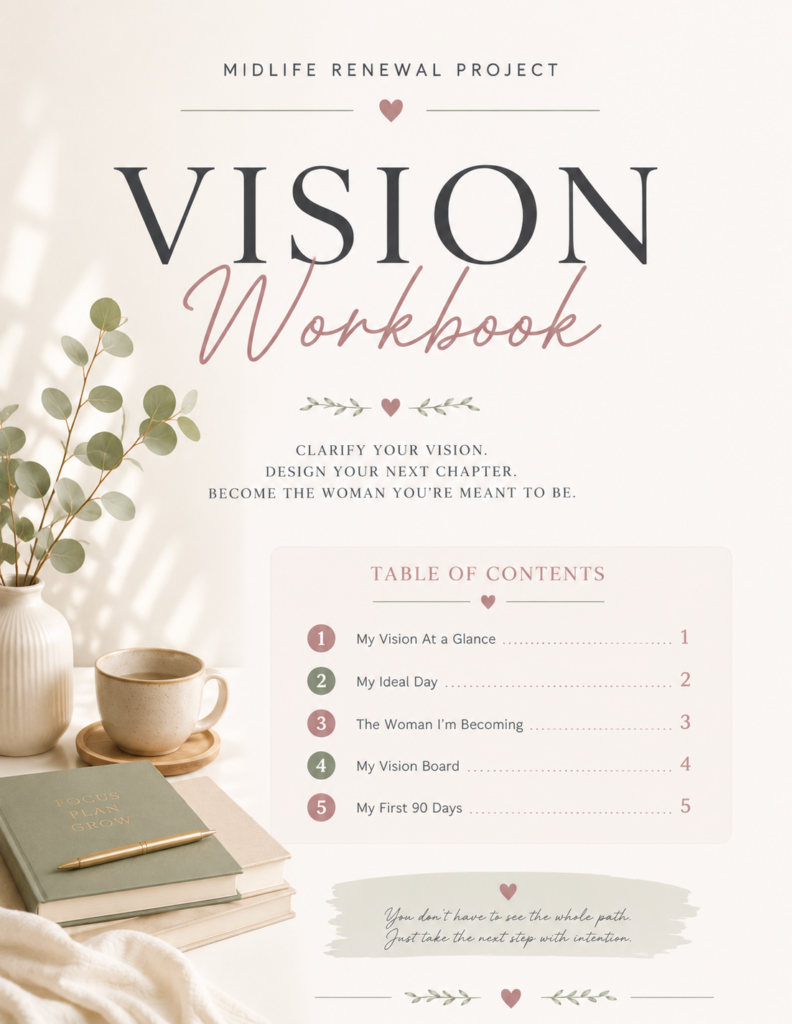
It gives you a place to think about where you are now, what you want more of, what you want less of and what you’d like your next chapter to become.
You don’t need a perfect five-year plan.
You just need somewhere to start.
7. You May Become More Comfortable in Your Own Skin
This one can sound strange considering that perimenopause can bring body changes that aren’t exactly welcome.
Your weight may shift. Your skin changes. Your hair may change. Your body may not look exactly like it did at 25.
Accepting those changes doesn’t always happen easily.
But something else can happen at the same time.
You begin realizing that your body was never supposed to stay 25 forever.
And perhaps your goal starts shifting from trying to look as young as possible to wanting to feel strong, healthy, energetic and confident in the body you have now.
You can still want to lose weight.
You can still want to build muscle.
You can still enjoy makeup, clothes, skincare and looking your best.
But maybe you start doing those things because they make you feel good rather than because you’re desperately trying to meet someone else’s standard.
That’s a very different kind of confidence.
8. You Become Less Willing to Tolerate Things That Make You Miserable
Sometimes we joke that women become less tolerant as they get older.
Maybe that’s not entirely a bad thing.
You may have less patience for drama.
Less patience for one-sided relationships.
Less patience for constant negativity.
Less patience for being taken advantage of.
Less patience for commitments you never wanted in the first place.
And perhaps less patience for your own excuses, too.
There comes a point when you start thinking:
Why am I still doing this if I hate it?
Not everything can simply be removed from our lives, of course. There will always be responsibilities and difficult seasons.
But there may be more things within your control than you realized.
Midlife can be the season when you finally start changing them.
9. You Realize It’s Not Too Late
There is a strange cultural message surrounding women and aging.
We’re constantly told that we’re getting older while simultaneously being sold everything imaginable to make sure nobody can tell.
But what if getting older isn’t something we have to apologize for?
You could have decades of life ahead of you.
That’s enough time to get stronger.
Change careers.
Start a business.
Repair a relationship.
Make new friends.
Deepen your faith.
Learn something completely new.
Travel.
Create something.
Improve your health.
Develop a hobby.
Change the way you spend your days.
Become more confident.
Start over in an area of your life that isn’t working.
You don’t need to have everything figured out by 40.
Or 45.
Or 50.
There is still time to change your mind.
10. You Can Decide What You’re Taking Into Your Next Chapter
Perhaps one of the greatest gifts of midlife is the opportunity to take inventory.
Not just of your body or your health.
Of your whole life.
There are things worth carrying forward.
People you love.
Traditions that matter.
Lessons you’ve learned.
Habits that serve you.
Parts of yourself you never want to lose.
But there may also be things you’ve been carrying for years that don’t deserve to come with you.
Other people’s expectations.
Old mistakes.
Comparison.
Resentment.
The need for everyone’s approval.
Habits that aren’t helping you.
Goals you don’t even want anymore.
The belief that you’re too old to change.
You don’t have to carry everything into the next chapter simply because you’ve carried it this far.
You get to choose.
Perimenopause Isn’t the End of the Good Part
I don’t think we need to romanticize perimenopause.
A hot flash is still a hot flash.
Being awake at 2 a.m. when you’d desperately like to sleep isn’t a beautiful journey of self-discovery.
And hormonal changes can cause real symptoms that deserve to be taken seriously and discussed with your healthcare provider when they’re affecting your quality of life.
But we also don’t have to look at this season as though everything good is behind us.
Your body may be changing.
Your role in your family may be changing.
Your priorities may be changing.
You may be changing.
And maybe that’s not something we need to fear.
Maybe the goal isn’t to become exactly who you were before perimenopause.
Maybe the goal is to take everything you’ve learned from the woman you’ve been and use it to intentionally create the woman you want to become next.
That’s what renewal is really about.
Not throwing away your old life.
Not becoming a completely different person.
And definitely not trying to turn yourself back into your 25-year-old self.
It’s looking at where you are today and asking:
What would make the next chapter better?
Then starting there.
Ready to Make This Your Own Season of Renewal?
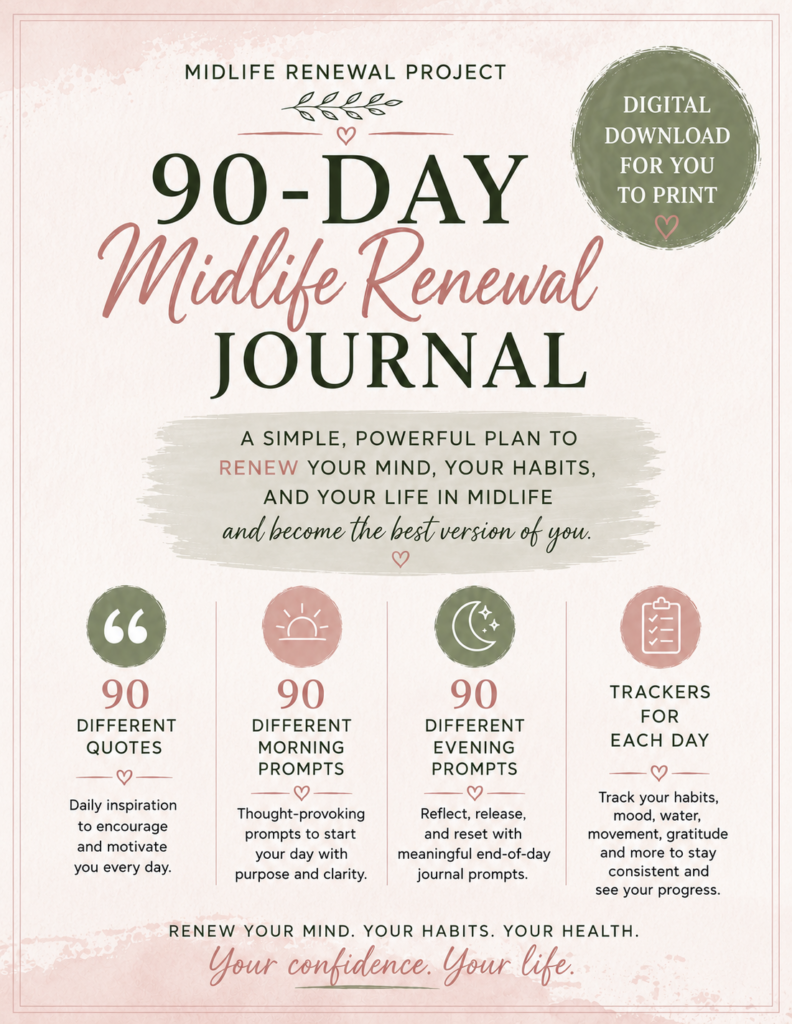
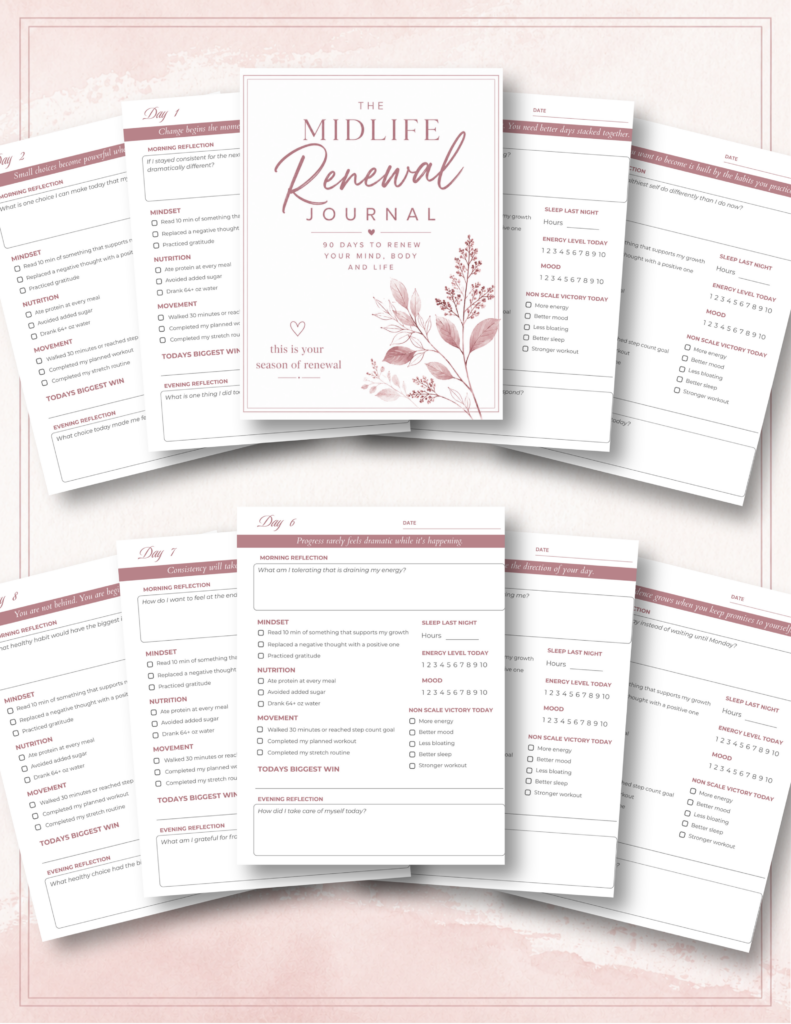
If you’re ready to do more than simply think about what you’d like to change, my 90-Day Renewal Journal was created to help you start putting that renewal into practice.
For 90 days, you’ll use guided morning and evening prompts, daily reflection and simple trackers to become more intentional about how you’re living, what you’re working toward and the person you’re becoming.
You don’t have to change your entire life this week.
You just have to start paying attention to what you want the next part of it to look like.