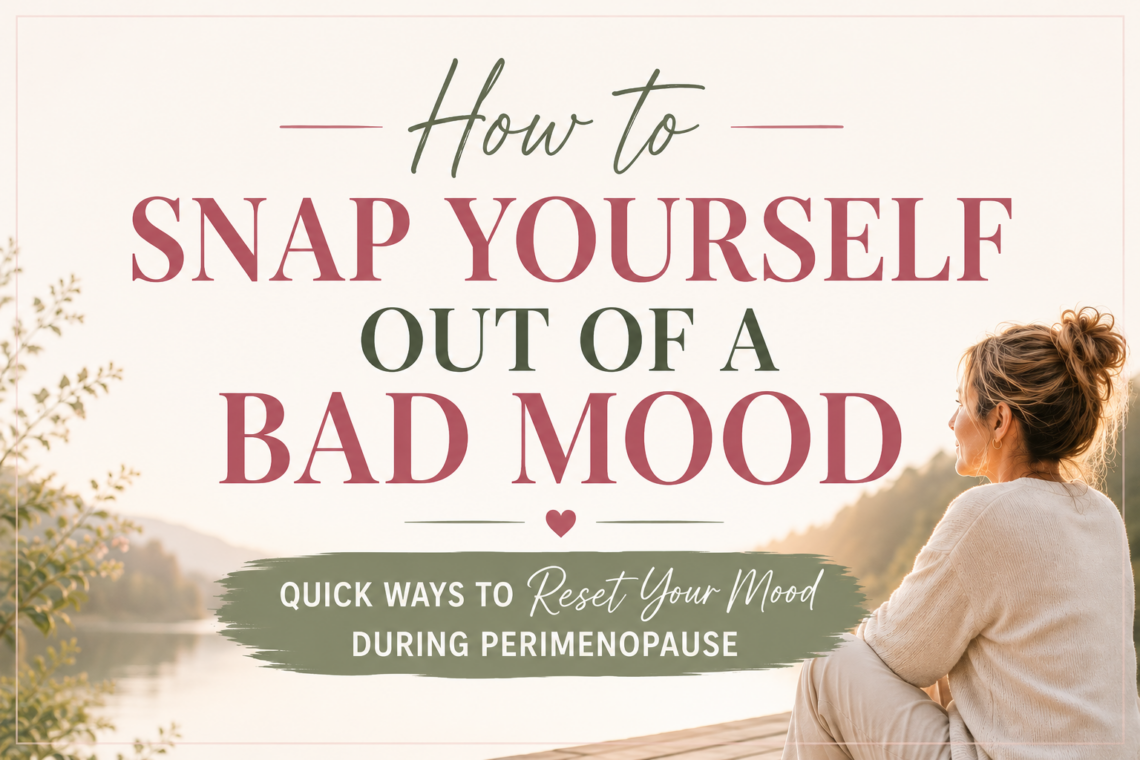
Your hormones may influence your emotions. They don’t have to decide your entire day.
Have you ever woken up feeling irritated for absolutely no reason?
Maybe someone chews too loudly. The house feels overwhelming. Your patience disappears before you’ve even finished your morning coffee. You find yourself thinking, Why am I so emotional?
If you’re in your 40s or approaching menopause, you’re not imagining it.
Perimenopause can bring sudden mood swings, irritability, anxiety, and emotional highs and lows that seem to appear out of nowhere. The hormonal changes happening inside your body are real, and they can absolutely affect how you feel.
But here’s the encouraging news:
You may not be able to control the mood that shows up, but you can control what you do next.
That one decision can completely change the direction of your day.
Why Perimenopause Can Affect Your Mood
During perimenopause, estrogen and progesterone fluctuate instead of following the predictable patterns they once did. These hormones interact with brain chemicals like serotonin and dopamine—the same chemicals that influence happiness, motivation, stress, and emotional regulation.
That’s why you may notice:
- Feeling irritated over small things
- Crying more easily
- Increased anxiety
- Feeling overwhelmed
- Low motivation
- Mood changes that seem to come out of nowhere
- Difficulty handling everyday stress
Knowing there’s a biological reason behind these feelings can be incredibly reassuring.
But understanding why it happens is only half the battle.
The next step is learning how to respond when a bad mood starts creeping in.
Stop Waiting to Feel Better
One of the biggest mistakes we make is believing we have to wait until our mood improves before we can have a productive or enjoyable day.
We tell ourselves:
“I’ll exercise when I feel more motivated.”
“I’ll clean the house when I feel like it.”
“I’ll be nicer after I calm down.”
The problem?
Sometimes those feelings don’t magically disappear.
Instead of waiting for your mood to change, start taking actions that help change your mood.
Small actions often create big emotional shifts.
The 5-Minute Mood Reset Method
When you notice yourself slipping into a bad mood, try this simple four-step reset.
Step 1: Recognize It
Pause for a moment.
Instead of saying:
“Everything is going wrong today.”
Try saying:
“I’m having a rough moment.”
Simply naming your emotions helps create distance between you and the feeling.
Remember:
You are experiencing the mood—you are not the mood.
Step 2: Interrupt the Pattern
Your brain often gets stuck in loops of negative thinking.
Interrupt that loop with something physical.
Try one of these:
- Walk outside for five minutes.
- Take ten slow, deep breaths.
- Splash cold water on your face or wrists.
- Stretch your body.
- Dance to one upbeat song.
- Step outside into the sunshine.
- Drink a large glass of water.
Even one minute of movement can help shift your state.
Step 3: Redirect Your Thoughts
Now that you’ve interrupted the spiral, choose where your attention goes next.
Ask yourself:
- What am I grateful for today?
- Is this problem going to matter next week?
- What would I tell my best friend if she felt this way?
- What’s one good thing that’s happened today?
Sometimes a short prayer, journaling for five minutes, or reading an encouraging passage is enough to quiet the mental noise.
Your thoughts matter because they influence your emotions more than you may realize.
Step 4: Refocus on One Small Win
Don’t pressure yourself to conquer the entire day.
Just choose one next step.
Maybe it’s:
- Fold one basket of laundry.
- Answer one email.
- Take a ten-minute walk.
- Eat a healthy lunch.
- Read ten pages of a book.
Momentum creates motivation—not the other way around.
Don’t Let One Bad Mood Steal Your Entire Day
We’ve all done it.
One frustrating moment turns into an entire wasted afternoon.
One stressful conversation ruins the evening.
One emotional morning becomes a day we wish we could start over.
But it doesn’t have to be that way.
A bad mood is just one chapter—not the entire story.
Every hour gives you another opportunity to reset.
A Tool That Helps Me Stay Consistent
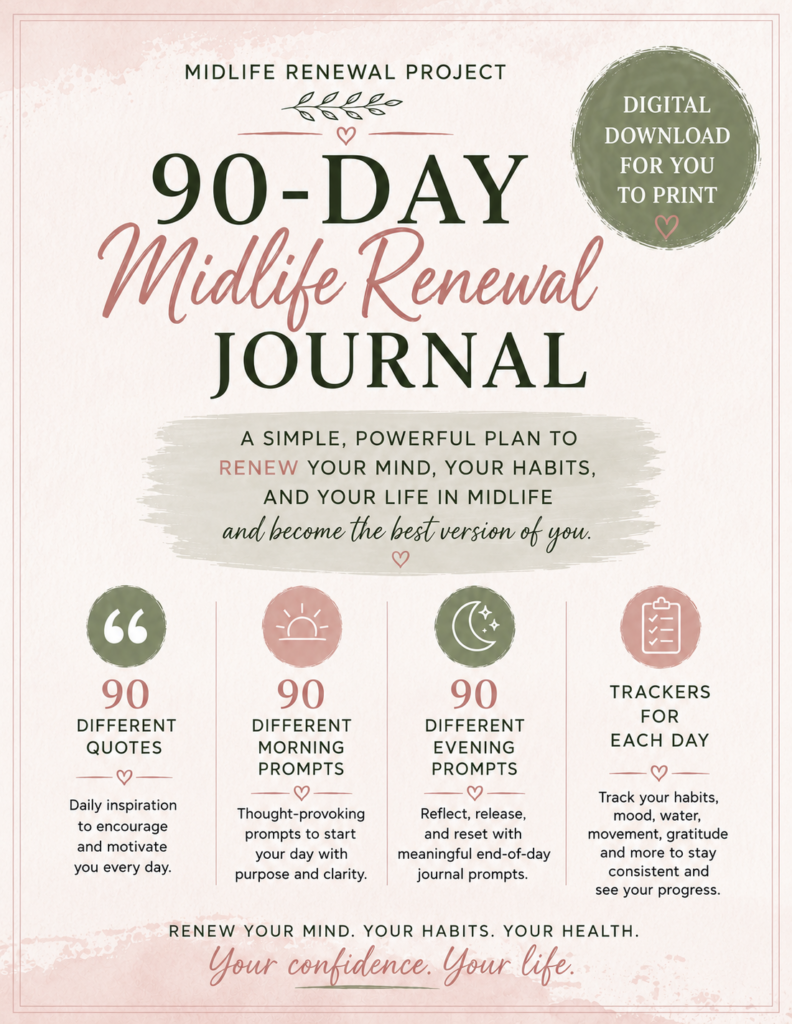
One reason I created my 90-Day Midlife Renewal Journal was because I realized transformation doesn’t happen through one big breakthrough.
It happens through small daily choices.
Each day includes prompts that help you slow down, reflect, and intentionally focus on what’s within your control. On days when emotions feel overwhelming, taking just a few minutes to write can help clear mental clutter and reset your perspective.
It’s not about pretending everything is perfect.
It’s about giving yourself a place to process what you’re feeling while continuing to move forward one day at a time.
Build Habits That Make Mood Swings Easier to Manage
Your mood reset becomes even more effective when it’s supported by healthy daily habits.
That’s exactly why I also created the Midlife Renewal Action Series.
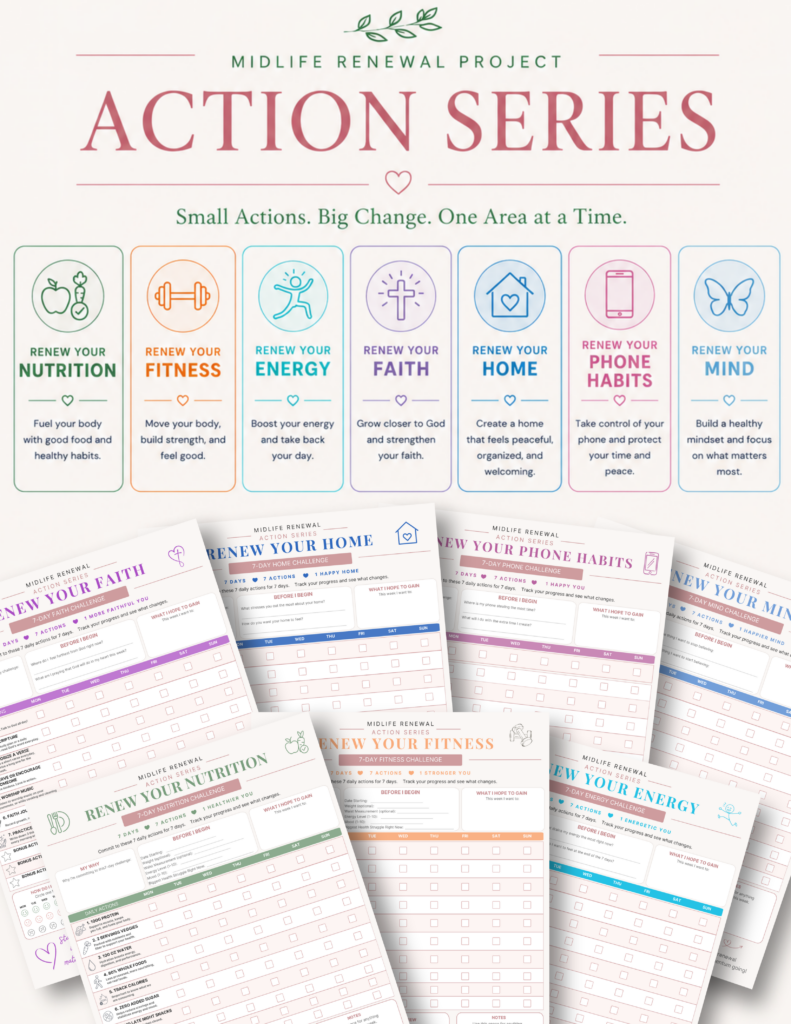
Instead of trying to change your whole life overnight, each printable focuses on one area at a time—whether that’s movement, nutrition, sleep, mindset, or creating routines that make life feel less overwhelming.
Small actions repeated consistently often make the biggest difference.
5-Minute Mood Reset Cheat Sheet (free download)
If you’re someone who forgets what to do when emotions take over, I’ve got something for you.
I’ve created 5-Minute Mood Reset Cheat Sheet that you can keep on your refrigerator, bathroom mirror, planner, or desk.
It will walk you through the exact steps to interrupt a bad mood before it takes over your entire day.
Be sure to join my email list so you’ll be the first to know when it’s available.
Final Thoughts
Perimenopause may change your hormones.
It may challenge your patience.
It may make some days feel harder than others.
But it does not get to define who you are.
You are stronger than one difficult morning.
You are more capable than one emotional afternoon.
And every single day gives you another opportunity to pause, reset, and choose your next step.
Because while you can’t always control the mood that shows up…
You can decide what happens next.